AI and Robotics for Kids: What Parents Need to Know
A practical overview for parents considering robotics and AI programs. What to expect, what to look for, and why hands-on learning matters.
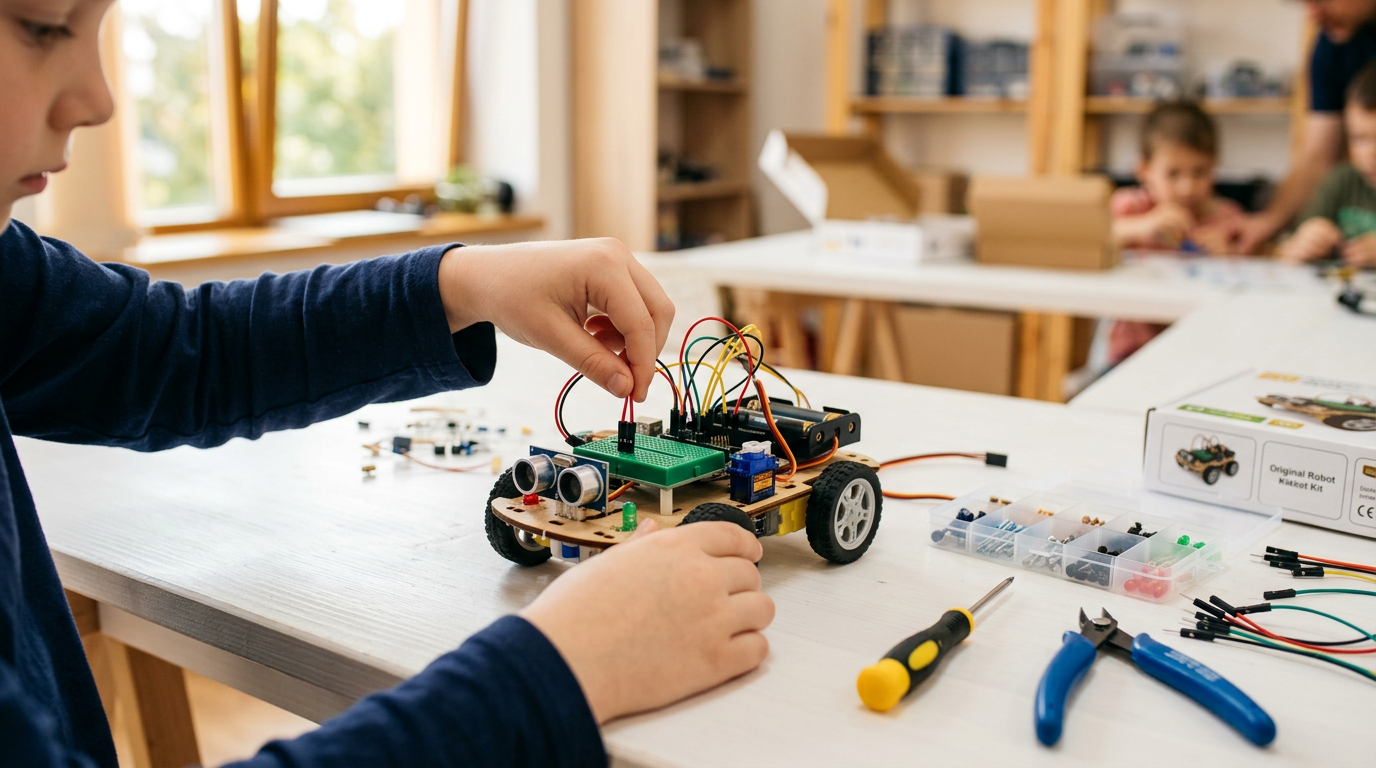
It is not just another coding class
When most parents hear "robotics for kids," they picture a group of children following instructions to snap together plastic parts. Modern AI robotics education is fundamentally different. Your child is not assembling a toy. They are building a system that senses, decides, and acts. The robot is the medium. The real lesson is how to think.
What a good program looks like
The best AI and robotics programs share a few traits that set them apart from generic coding classes:
- Real hardware. Children learn differently when they can see and touch the result of their code. A robot that physically moves when they press "run" creates a feedback loop that screens alone cannot match.
- Private or small-group attention. AI concepts require different pacing for different children. A 9-year-old grasping sensor logic quickly needs to be challenged, not held back by a group pace.
- Project-based outcomes. Every module should end with something the child can demonstrate to their family. If they cannot explain and show what they built, the learning has not gone deep enough.
- Instructors with real AI experience. The difference between someone who has built AI systems and someone reading a curriculum aloud is enormous. Ask who is teaching.
What age should my child start?
Most children can begin meaningful robotics work at age 8. At that age, they are capable of understanding cause and effect, following multi-step instructions, and most importantly, getting excited when a robot does what they told it to do. Older children (12-16) can move faster into text-based coding and deeper AI concepts like machine learning and computer vision.
What about screen time concerns?
This is one of the most common questions from parents. The distinction matters: passive screen time (watching videos, scrolling social media) is fundamentally different from active creation (writing code, testing a robot, debugging a program). Robotics education is the active kind. Your child uses a screen as a tool, not a destination. And much of the work is physical: assembling, testing, adjusting hardware.
What will my child actually be able to do?
After a few months in a structured program, a typical 10-year-old can build a robot that responds to voice commands, avoids obstacles, and shows emotions on a screen, all controlled by code they wrote themselves. That is not a toy. That is genuine engineering, made accessible for a child.
Ready to get your child started?
Every session is private 1-on-1 with a real AI expert. All equipment provided on-site.